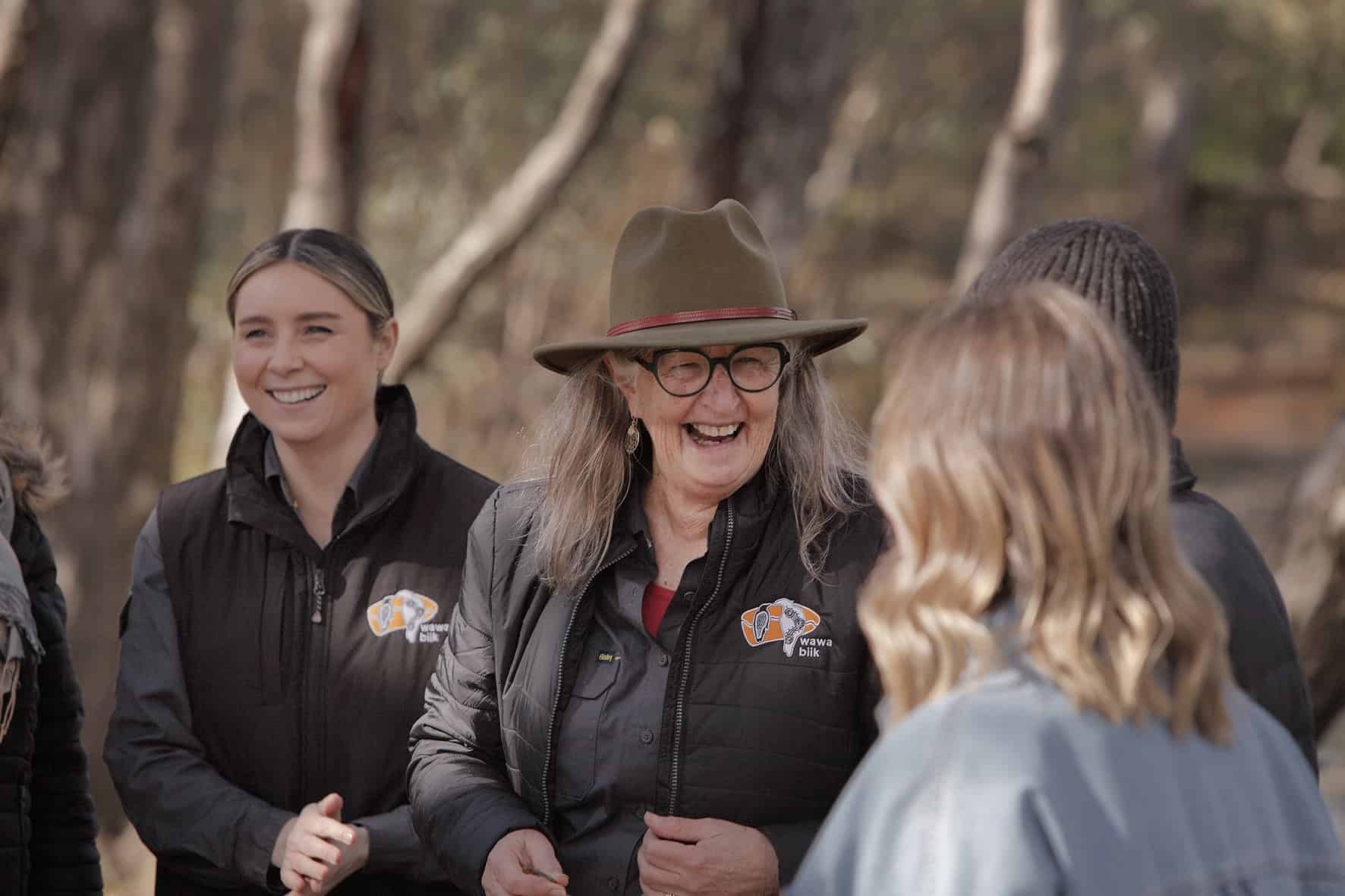
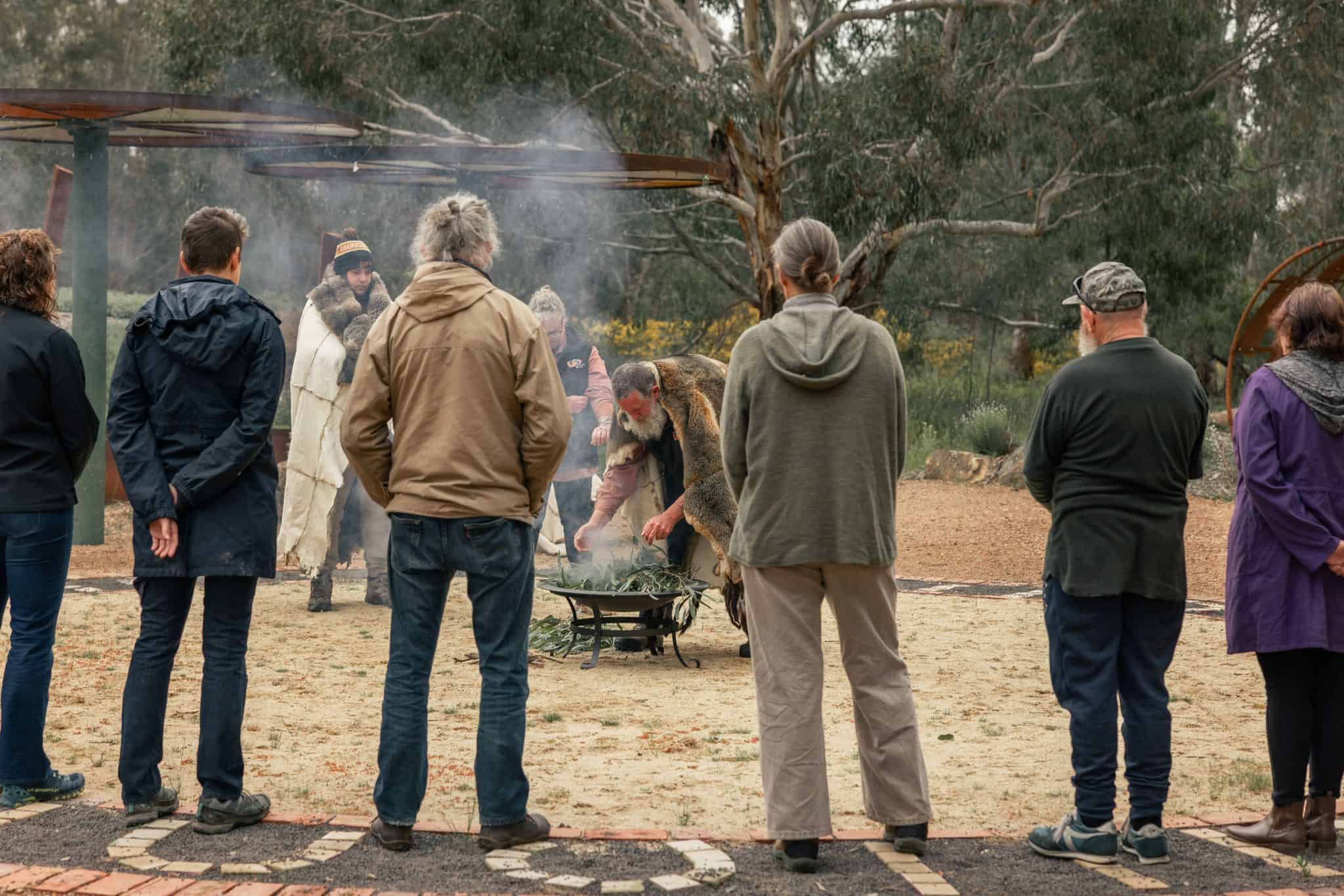
wawa biik is set for tourism growth!


Big things are happening for First Peoples tourism in Victoria – and wawa biik is right at the heart of it.

Last week, Steve Dimopoulos MP, Minister for Tourism, Sport and Major Events, launched the First Peoples Tourism Plan 2025–2030. This bold plan recognises the growing desire for authentic cultural experiences and the power of First Peoples to lead their own tourism journeys. It’s about ensuring Traditional Owners share in the $39.2 billion tourism sector while sharing stories, knowledge, and perspectives that connect people more deeply to Country.


For wawa biik, the momentum is building. We’re excited to have received State Government funding through the First Peoples Industry Strengthening Program. This support will help us shape our very first tourism strategy – and bring to life our inaugural Taungurung Festival in 2026. Make sure you’re signed up to our newsletter so you don’t miss these milestones!


Change is also happening locally. The new Goulburn Region Visitor Economy Partnership (VEP) has been created to guide tourism across Mitchell, Strathbogie and Shepparton shires. The VEP is committed to balancing growth with care for Country, Culture and community – and we’re proud that Bonnie Cavanagh, COO of the Taungurung Land and Waters Council, is a voice at the table. Her leadership will ensure Taungurung values, knowledge, and priorities are woven into the region’s tourism future.


Beyond our region, wawa biik is part of a powerful alliance of First Peoples tourism representatives. This group is redefining what success looks like: not competition, but collaboration. Not individual gain, but collective strength. Together, we’re telling a bigger story – one of resilience, renewal, and cultural pride – that First Peoples tourism is bringing to life across Victoria.


And here’s where you come in. Supporting wawa biik doesn’t have to mean dollars. You can:
Share our experiences through your newsletters, websites, or socials.
Repost our updates.
Encourage your guests, friends and networks to join us on Country.
Every small action helps grow a movement that celebrates Taungurung Culture and ensures First Peoples voices are strong in tourism.
The future is bright – and we can’t wait to walk this path with you.


Keeping Culture strong on Country: The passing down of Taungurung Knowledge

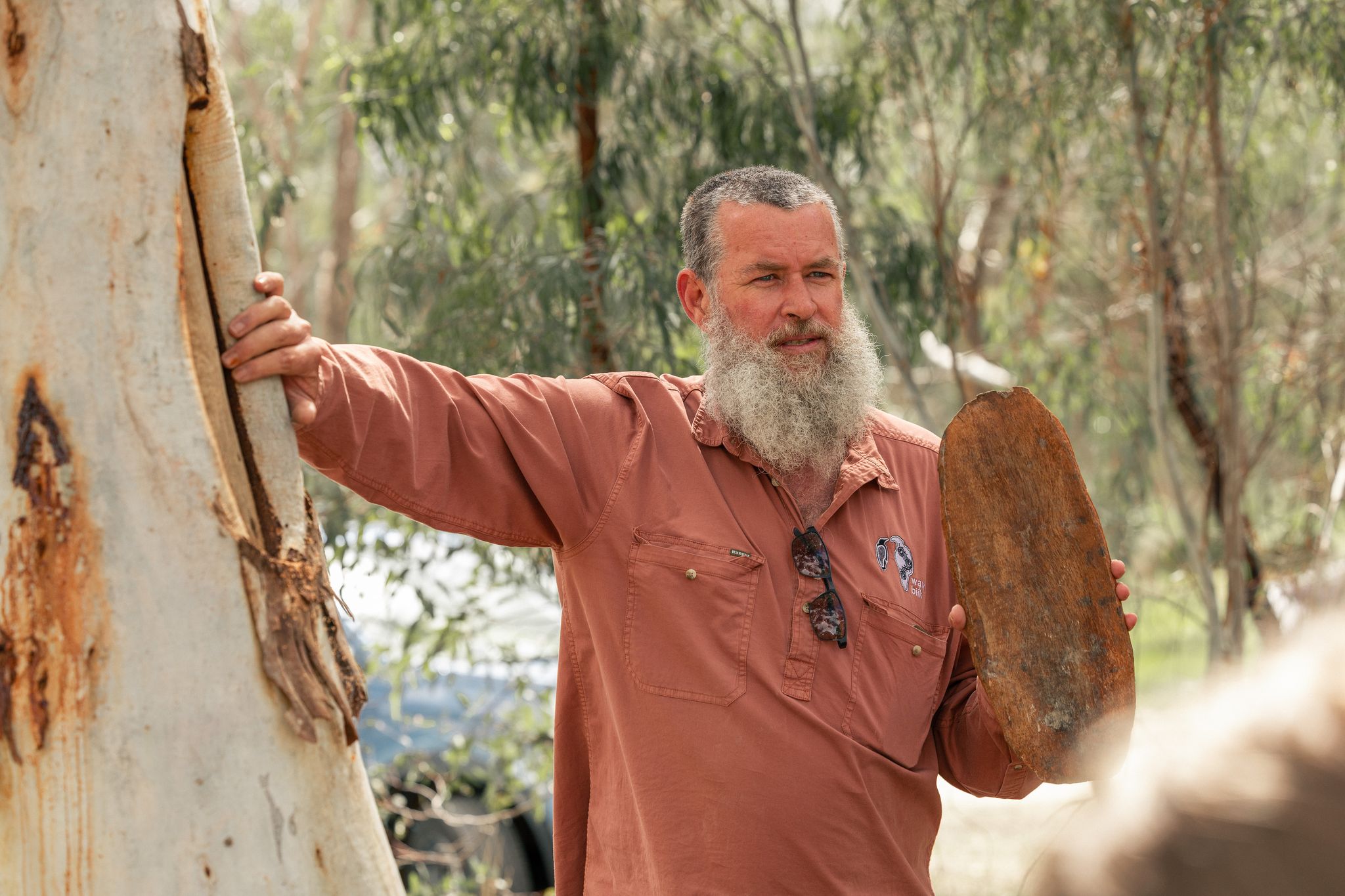
On Taungurung Country, the making of cultural artefacts is much more than a skill — it is a way of reading, listening to, and caring for Country. The knowledge of how to gather and shape resources like daanaks (coolamons) and shields has been passed down through generations, taught by Elders and role models, and practiced with respect for the trees, waters, and seasons that sustain us.

My name is Ben Young, and recently, I had the privilege of learning to cut a daanak from Ashley, a cultural role model, and Uncle Shane, a respected Taungurung Elder.  Both shared their own techniques for making the daanak — a skill that begins not with tools, but with observation. You must look carefully at each individual tree, and its place in the landscape, to know if it is ready to give. In wetter times of year, more options appear; in dry times, the choices are fewer, reminding us that timing and patience are part of cultural practice.

In the Nagambie region, where the water brings extra moisture to the trees, we cut scars from the South-Eastern side — protecting them from the harsh afternoon sun. Not every tree is suitable. The bark must offer a smooth and even surface, and only those ready to share their strength can be chosen.

From this work, we gathered daanaks and a shield. Daanaks, also known as coolamons, are shallow vessels shaped and dried to the perfect curve. They become both practical and symbolic — used for gathering and serving food, but also carrying stories of Country. The shield we cut was shaped like an elongated daanak. To finish it, holes will be carved in the centre and a blackwood branch bent to form the handle — creating a strong, ceremonial tool.

These practices are guided not only by contemporary agreements, like the Recognition and Settlement Agreement (RSA) and Land Use Activity Agreement (LUAA), which give Taungurung People rights to gather resources on Crown Land, but also by our own Lore. That Lore tells us to never take more than we need, to harvest carefully, and to stop if Country is not healthy enough to give. It reminds us that cultural practice is inseparable from caring for Country.

Making artefacts on Country is therefore not simply about creating an object. It is about relationships — with Elders and knowledge-holders who pass down skills, with the trees and waters that provide resources, and with the broader community who continue to carry and honour Taungurung Culture. Each daanak, each shield, carries with it the story of the land it came from, and the responsibility to walk gently with Country for generations to come.

Ashley shared his reflection from the day also:

As a young generation of the Taungurung nation I am very privileged and aware of the cultural roles and responsibilities that I hold! And having days out on country like the Daanak day are very special to me. It provides opportunity to practice our culture and strengthen it. It gives me a personal role to help the younger generations below me to come up strong and teach and show them the same culture that I was taught from our older generations and Elders. To give more mob the confidence to get out on Country and live their culture as we have the right to do so.” Ashley Wilkinson

Information and reflections shared by Ben Young and Ashley Wilkinson – wawa biik Cultural Guides.  Images of Ben and Ashley cutting their daanaks. 

The journey of Truth-telling and Treaty

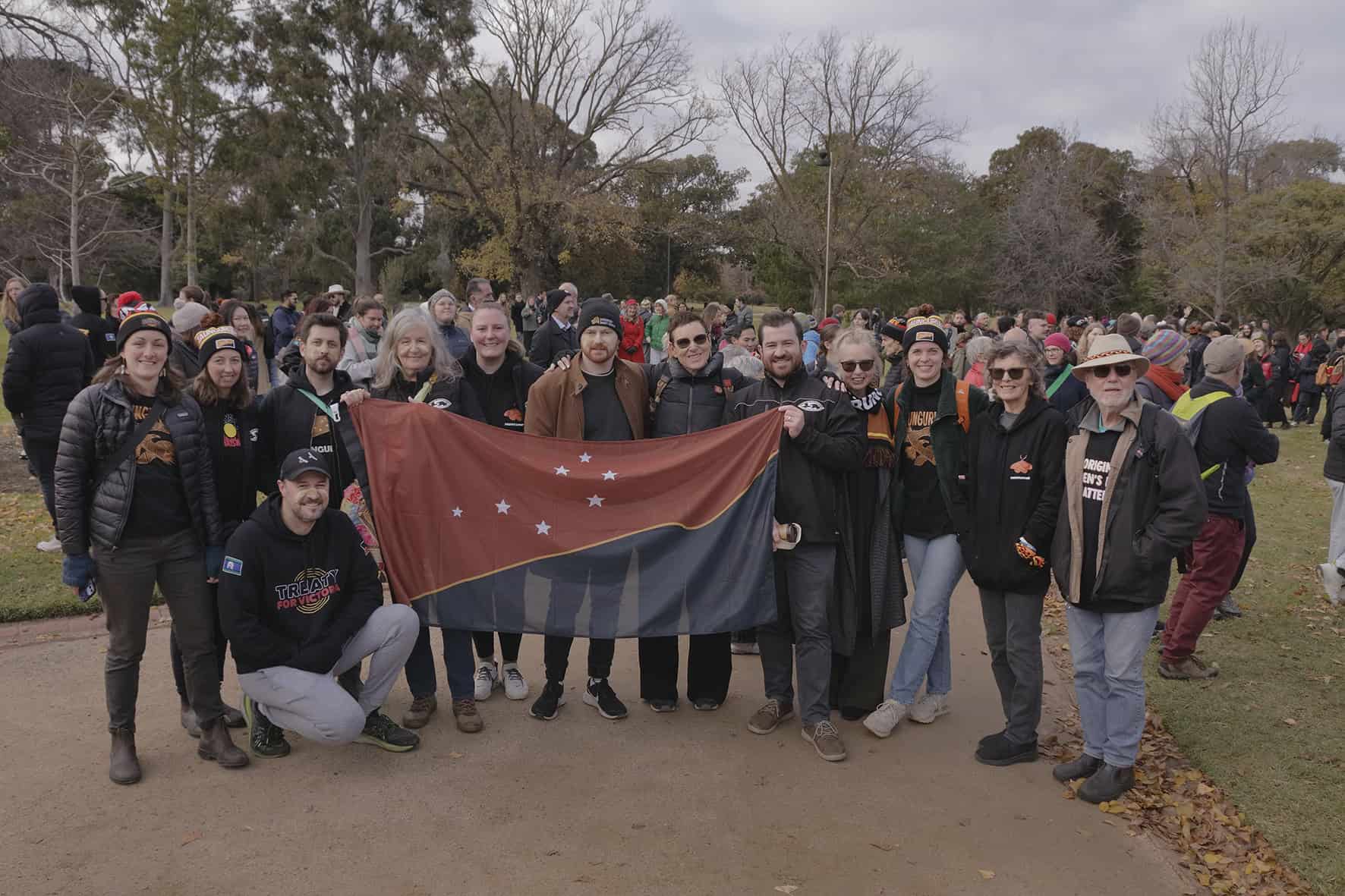
The Yoorrook Justice Commission published its final landmark report last week — a powerful and definitive account of Victoria’s history since colonisation, as told by First Peoples. This report has been an important step for truth-telling and healing that will pave the way for Treaty negotiations in Victoria. The First Peoples’ Assembly of Victoria is the representative body that will negotiate statewide treaties with the State Government on behalf of all Aboriginal and Torres Strait Islander Victorians. Kaley Nicholson is the appointed Taungurung Representative who will champion the interests of the Taungurung Nation in the statewide treaty making process.

Kaley says “This role is a great responsibility, one I carry with pride, grounded in culture and community. Treaty is a chance to pursue justice and restore the rights of our people. I’m committed to ensuring the voices, needs and aspirations of the Taungurung Nation are heard, respected and reflected in this process“. We yarn with Kaley to find out about Treaty for Victoria and what you can do as an ally to support the journey.


Finding purpose on Country: why the value of wawa biik extends beyond the tours.

In today’s world of work, purpose should no longer be just a buzzword — it should be a guiding principle.

At wawa biik, our purpose is to nurture an inspired and connected community of First Peoples and allies that take pride in their shared custodianship of Taungurung Culture and Country. In this era of the ‘Great Reflection’ where people are keen to align their personal values with their work and contribute to society in meaningful ways, we believe a wawa biik private experience with your colleagues can provide value that extends beyond the tour. Here’s how:

10 ways to take meaningful action this National Reconciliation Week

It doesn’t matter where you are on your ally journey, all that matters is that you’re on the journey. The 2025 National Reconciliation Week theme is ‘Bridging Now to Next’. It’s an opportunity for all Australians to learn about our shared histories, cultures, and achievements and take meaningful action towards creating a culturally vibrant and safe society where the rights, stories and values of First Nations’ People are respected, and celebrated.  Here’s some ways you can take action:

The significance of culturally modified trees

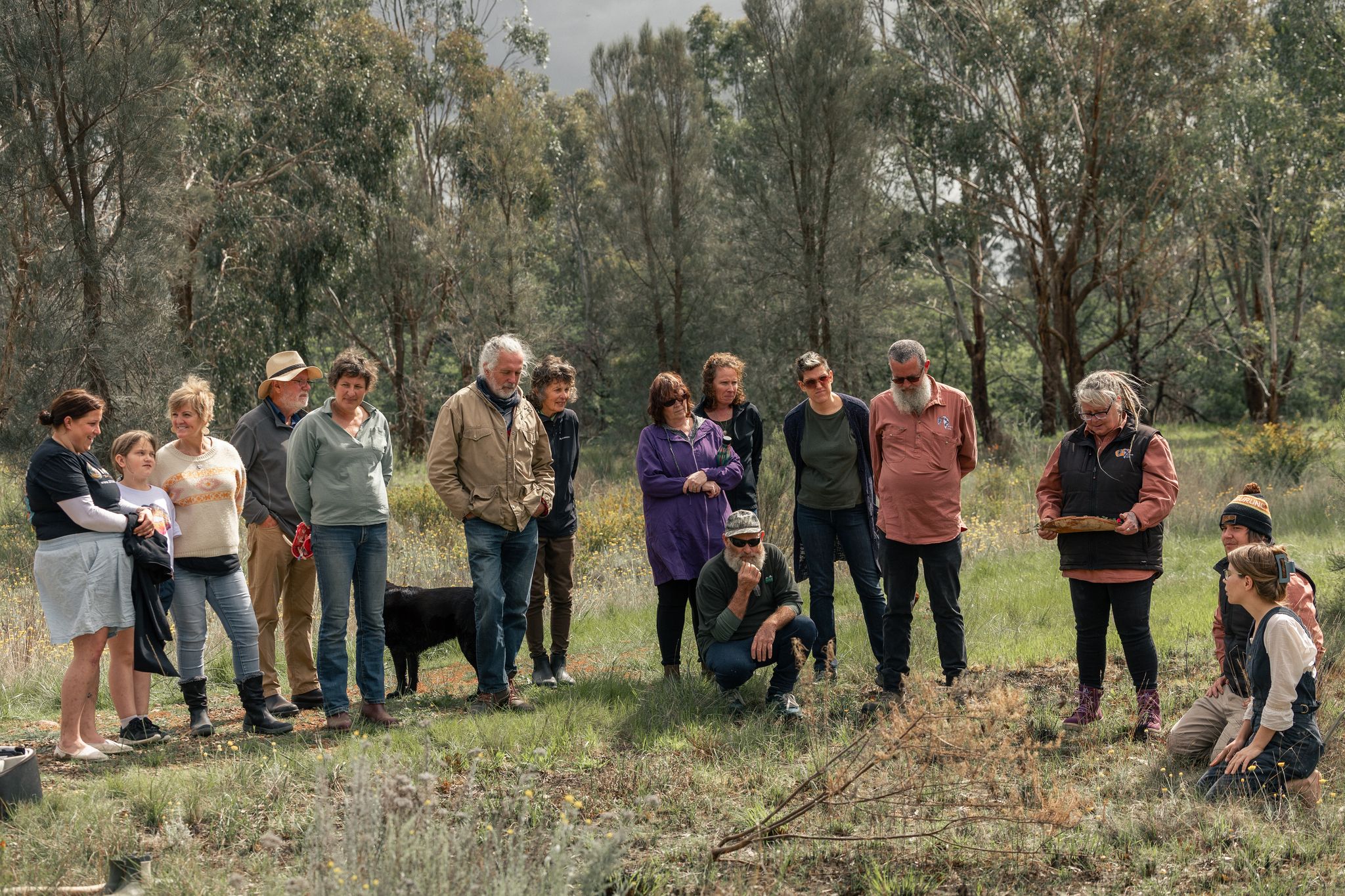
A hush settles over the group as wawa biik guests gather beneath the towering presence of a gnarly old Greybox. Its weathered trunk bears a deep scar on the south-east side—silent but powerful evidence of an ancient story. This tree has likely stood here for centuries, holding memory in its bark and earth beneath.

Uncle Shane and his nephew Ashley, proud Taungurung cultural tour guides, stand beside it—not just as storytellers, but as descendants of those who walked this land long before. Uncle Shane gently places his hand on the tree, while Ashley pauses in quiet respect. Then, with care and clarity, they begin to share its significance: this is a culturally modified tree, shaped by Ancestors who once removed a section of bark.

That bark became a sled, used by Taungurung women to carry their harvest—tubers, berries, roots—across the muddy floodplains. As you listen, a vivid picture forms: women wading through wetlands, strength and knowledge guiding every step, returning to camp with food and stories for their kin.

The image stays with you. It’s not just history—it’s living culture, rooted in place, and carried forward in story.

Not only does this tree tell the story of the movement of Taungurung People through this landscape, but it holds the stories of what the landscape would have been like – the water flows, the availability of food, the forest type.

This single tree is more than just a survivor of colonisation, climate change and environmental degradation, it is a piece of a larger puzzle that helps archaeologists and the Taungurung community to awaken more of the overall biocultural story of Country.    

The word ‘scar’ for describing these trees is an unfortunate colonial term which has stuck. First Peoples prefer to call these trees ‘Culturally Modified Trees (CMTs)’ – an umbrella term that references the value of trees for multiple cultural practices.  For some tree lovers, the idea of ‘scarring’ can elicit concerns that the tree has been killed in the process. This is not the case. There is minimal harm done to the overall health of the tree.  First Nations People live by a cultural lore that prevents them from unsustainable use of any natural resources.  

When referring to ‘scar trees’ this references a tree that has had bark removed to the level of sapwood to create a useful item such as a coolamon (daanak in Taungurung language) or canoe (gurrong in Taungurung language) or for other purposes. First Peoples are taught by their Elders the ‘art’ of scarring a tree to ensure the tree can heal. There are particular processes, preferred times of year, and species of trees that are taken into consideration, as well as methods for looking after the tree to aid with the quickest healing time possible. Evidence of healthy scarred trees dated at 700 years old have been found on Taungurung Country with their scars almost fully sealed over, which proves that this cultural practice has been sustained and perfected for generations. 

Once people understand the cultural significance of these trees, they realise the enormous value they provide us all in understanding the history, human geography and sustainability of these living cultural landscapes.

Taungurung Elder and wawa biik guide Uncle Shane explains what cultural heritage means for him as an Elder:

“It helps us re-build our stories. A lot of information was dormant when our Ancestors were put onto missions and forced to give up their culture. We are slowly waking these stories to find travel routes, Dreamtime stories and information to start linking stuff together. Cultural heritage can also reveal how much our Country has changed over a couple of hundred years so can give us vital information on how to live more sustainably. The way the current process works, unless there’s a development happening on Taungurung Country, we may never get the opportunity to find important sites. Doing a Cultural Heritage Management Plan (CHMP) gives us a chance to put a story together for future generations – so they know where mob have been camping and collecting resources from. It’s waking up our culture, our ways, our knowledge that we can all learn from”.

Protecting CMTs is so important yet so challenging.  CMTs are chopped down or vandalised at an alarming rate in Australia, there is also the issue of natural ageing and decay, timber cutting and environmental problems such as salinity and fires[1]. Whilst it’s a cultural practice that more people should know about, it’s a fine line between sharing this cultural knowledge with the public while trying to protect culture, for the risk of this information getting into the wrong hands.

Jonah Honeysett – Cultural Heritage Advisor tells us how the Taungurung Land and Waters Council has responsibility for looking after these CMTs:

“The Taungurung Land and Waters Council as the official Registered Aboriginal Party has statutory obligations for the preservation, protection, and conservation of Taungurung traditional cultural materials and cultural heritage sites within Taungurung Country. TLaWC is also responsible for conducting archaeological surveys that inform Cultural Heritage Management Plans (CHMPs) and Cultural Heritage Permits and has the capacity to investigate, protect and register the cultural heritage sites identified on the Victorian Aboriginal Heritage Register (ACHRIS).”

We are the Knowledge Holders, the experts and the community that has the rights and responsibilities to look after our cultural objects, our cultural knowledge and our Country. It’s empowering for our People. It is important that there is self-determination for us as Traditional Owners in handling and protecting Taungurung Country/cultural objects. I find it liberating. It’s about acknowledging the antiquity in the Country and showing that we had so much more than a nomadic lifestyle”.

Many may think that ‘scarring’ a tree is something of the past, but it is still a cultural practice that has continued to this day.  For young Taungurung people, it’s an honour to scar their first tree alongside an Elder.  There are many contemporary scar trees in the landscape many of which tell their own story of the passing down of cultural knowledge to the next generation.  This passing on of knowledge is what is referred to as ‘intangible cultural heritage’ – it’s the knowledge, the language, the stories, the beliefs that are all as important as the tangible cultural heritage.

Taungurung Elder and artist Uncle Mick Harding tells us about the cultural practice of scarring a tree and why this is still a significant cultural practice today:

“Back before invasion, bark vessels were used for collecting foods, building rooves for homes, holding water, canoes, and as a cradle for our babies. Although we might not be scarring a tree for the same reason as our Ancestors did, the stories and the meanings are still the same. We are connecting with our Culture and Country. Although we are using modern tools, we are continuing our cultural traditions. For Culture to stay alive, we must adapt to new technology. Human beings are storytellers – it is our story that stays alive, it is not just about the axe you are using, it is the story you are telling”.

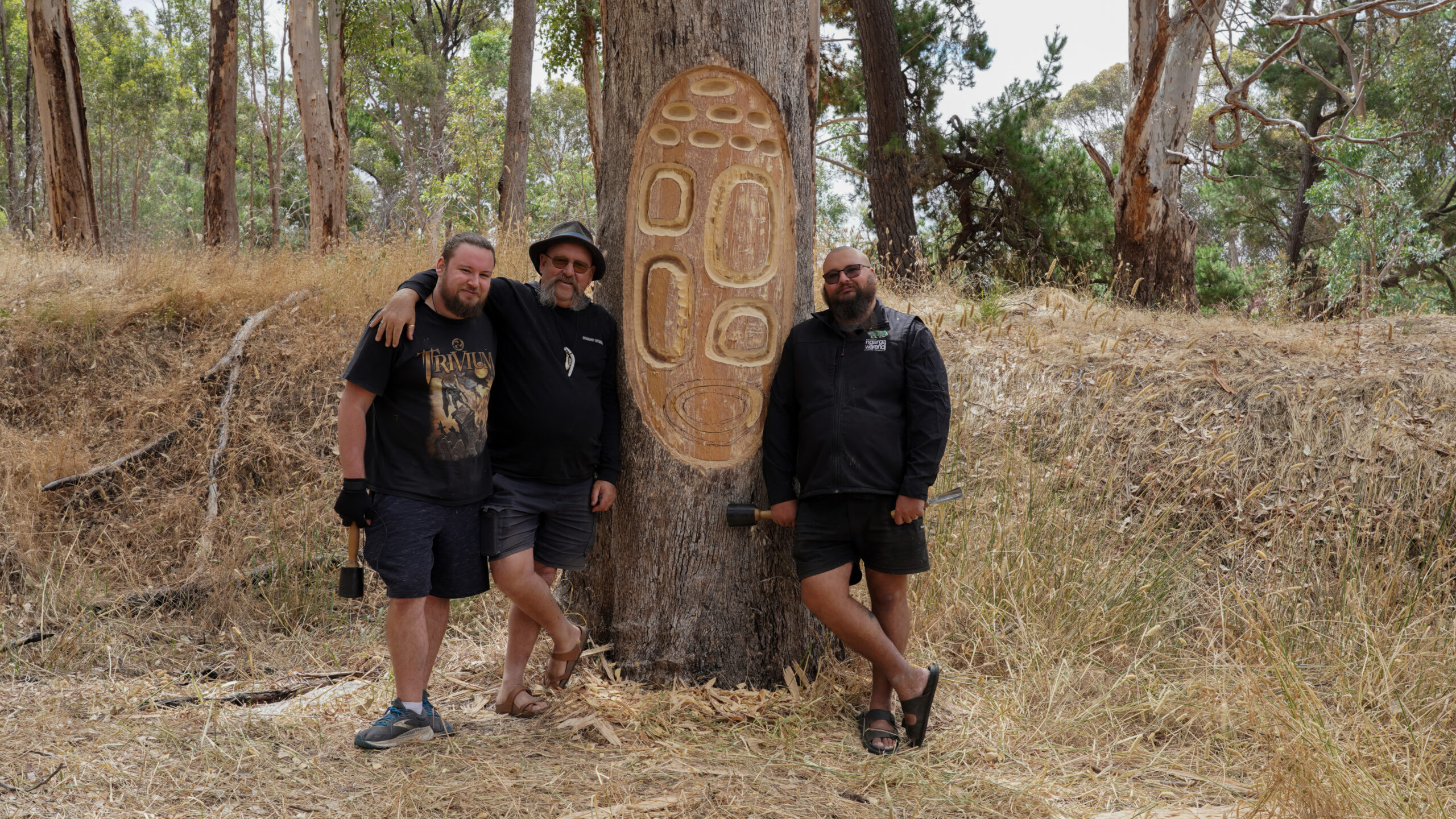
For an Elder, there is a cultural responsibility to hand down knowledge to their children and community. Uncle Mick Harding runs an art business called ‘Ngarga Warendj’ – it’s a family business with his wife and two sons.  He took on an art commission as a way of teaching his sones how to ‘scar a tree’.  They spent 10 weeks on Taungurung Country, over a 6–7-month period creating a series of scar trees as part of the ‘Art on the Great Victoria Rail Trail’ project on Taungurung Country. They found over 200 trees they could scar but scarred and carved 20.  Uncle Mick says “Being able to be on Country with my sons, teaching them how to scar a tree is something I just cannot explain. Being with each other as a family, bonding and learning, it is just something that today’s society doesn’t allow for anymore, so this was really nice to complete, and at the end of the project both my sons were really confident in scarring trees.”

CMTs are part of a living landscape and living story that we should all be proud of as Australians. The work that the Taungurung cultural heritage team does to protect these trees for current and future generations is often challenging but necessary and rewarding work.  wawa biik believes education plays an important role in cultural heritage protection too. The more people that know and care about culture, the more advocacy and support there will be for cultural heritage protection.

If you’re interested in learning more about the living cultural landscape of Taungurung Country, join our upcoming wawa biik small group experiences which are led by Taungurung Elders and guides.  

Image: Uncle Shane pictured with a CMT

Book via www.wawabiik.com.au   
wawa dharrang (hello tree) – a new Taungurung artist-led experience

wawa biik is pleased to announce a new experience designed and led in collaboration with Taungurung artist and Elder Uncle Mick Harding.  This is an in-depth experience (5 hours) of walking, yarning, sharing food, making and learning alongside Uncle Mick, his sons and our wawa biik guides.  There is no other Aboriginal cultural experience like this available in Victoria.  Perfect for those with an interest in Aboriginal art, Taungurung cultural practices and connections to Country.   You will travel from Yea wetlands to Yarck and the base of the Gobur Range to deeply engage with Taungurung stories that have shaped and continue to shape this living cultural landscape.

Uncle Mick Harding is a proud Taungurung Elder of the Yowong-Illam-Baluk and Nattarak Baluk clans of the Taungurung Nation. He is a multi-disciplinary artist specialising in wood working, sculpture, and printmaking through his business Ngarga Warendj (Dancing Wombat).  He’ll share in-depth discussions around his work called ‘We Scar Many Trees’, created with his sons over a 10 week period as part of the Art on the Great Victorian Rail Trail project.  Not only will you get to learn first-hand about their creative practice but they’ll guide you through a workshop to make your own stringybark rope – a traditional cultural practice still used today.

A bush foods BBQ shared together in the tranquil Yea Wetlands will be a highlight of the day with opportunities to ask questions of the artists and wawa biik guides while trying traditional bush food flavours.    

This experience is made possible thanks to the support of the Victorian State Government through Creative Victoria.

To book jump to wawa dharrang | wawa biik wawa dharrang

Teaming up for turtles on Taungurung Country

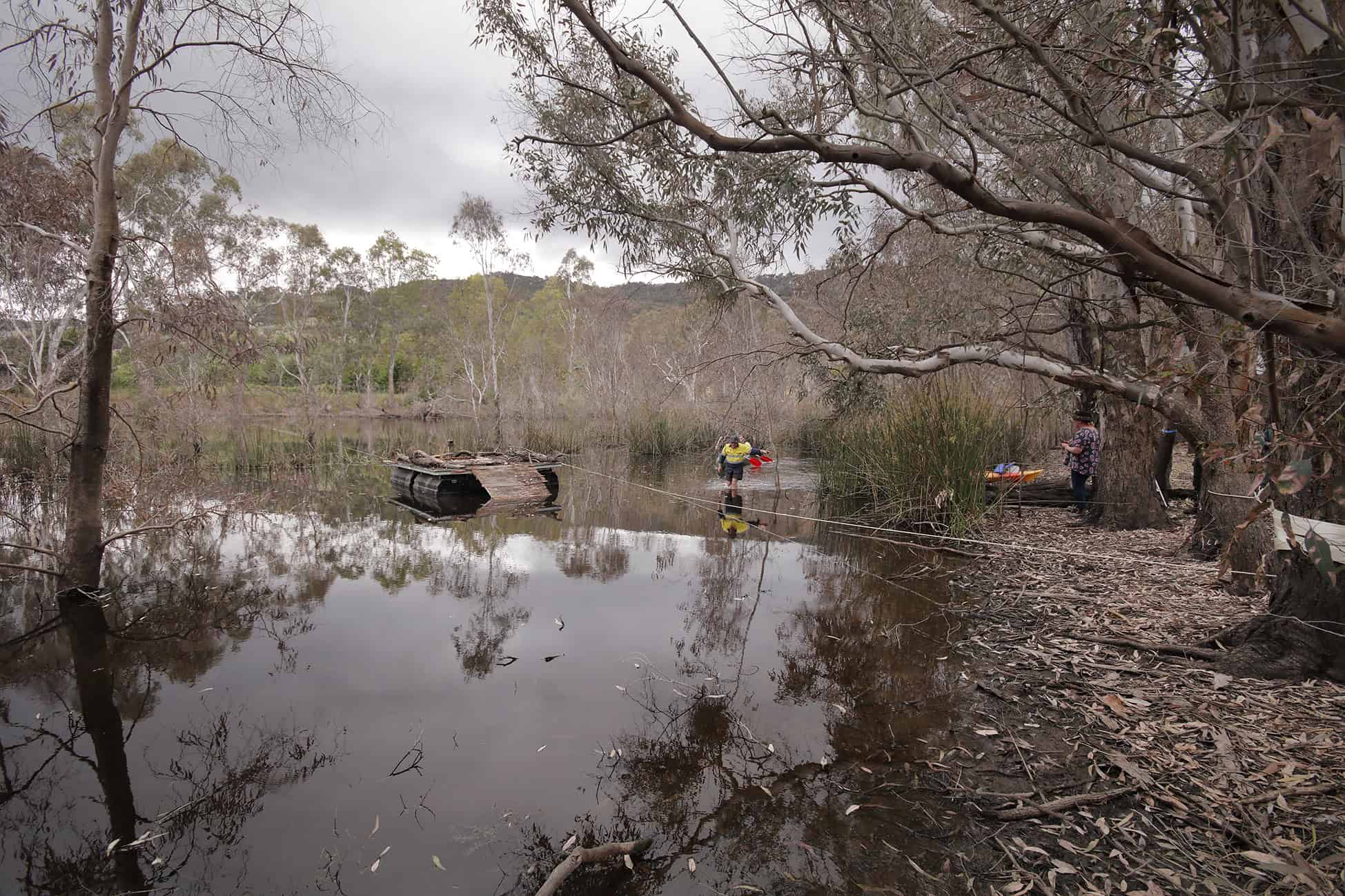
When Taungrurung Baan Ganalina (Guardians of Water) expressed interest in creating a turtle yilam (home), Horseshoe Lagoon immediately came to mind. It is a wetland that holds significant cultural importance to the Taungurung people and has been receiving environmental water from the nearby Waring (Goulburn River) over the last few years to eradicate weeds and improve the health of the wetlands.

Ongoing efforts to care for Horseshoe Lagoon by the Taungurung Land and Waters Council (TLaWC) and Baan Ganalina in partnership with Goulburn Broken CMA and Parks Victoria has seen the return of all three inland species of turtle to the site—the Eastern Long-necked, Murray Turtle, and Broad-shelled Turtle. To encourage turtle breeding, TLaWC, Taungurung Park Rangers, Biik Environmental and Baan Ganalina, with support from Turtles Australia Inc, crew, initiated a project to construct floating habitat islands to safeguard turtle eggs from predators, especially foxes. While herons, crows, snakes and rakali pose a threat, it is the foxes that are particularly notorious for raiding nests just hours after the eggs are laid. Since the turtle island was established in November, it was only a matter of days before the turtles were observed and photographed using their new yilam. A remote trail camera on the island provides clear imagery of the turtles nesting. Although we know foxes are capable swimmers, they haven’t shown much interest in Turtle Island so far.

This is a great example of working together to look after important species. More turtle protection works and yilam installations are planned for the next 12 months to ensure the three inland turtle species have the best opportunity to survive and thrive.

The turtle island project is supported by the Victorian Government’s Icon Species Program 2023-2025.

Wading elbow deep in the wetlands

Seed picking season is one of my favourite times of the year.  The sun is shining, you’re outside and as close to the natural world as you can be – elbow deep in a shrub, nose down in a grassland, gently harvesting seed into your bag or bucket. 

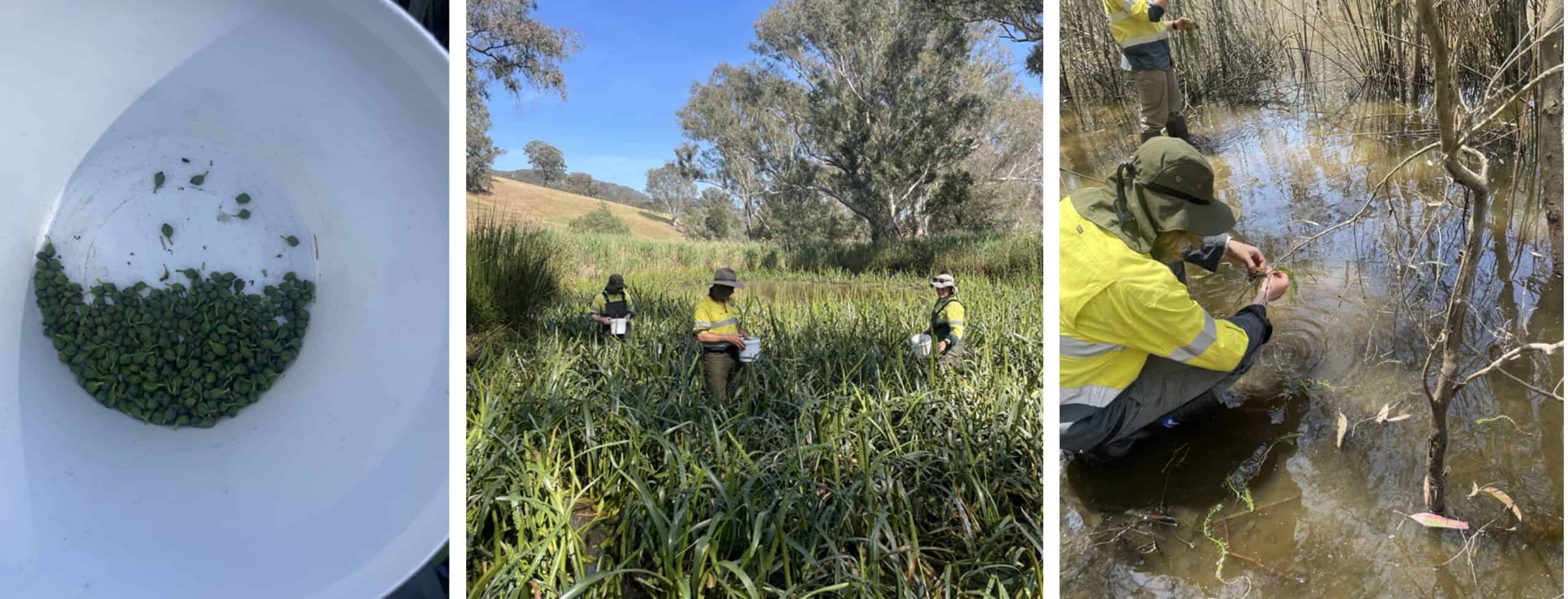
My favourite collection day this year was with Tony Fitzgerald and the Biik team harvesting Water Ribbons.  Water ribbons are the best bush tucker.  I think they’re Uncle Shane’s favourite too.  The tubers are crisp and crunchy, the closest likely flavour is the water chestnu,t I think.  Even the green, swirly seeds are a nice salad garnish and oh so easy to pop in your mouth and snack on while you pick. 

Wading into a billabong to harvest can be a bit intimidating.  First you push through the common reed – well above your head height and situated on the water’s edge in the boggy mud.  It rustles as you push through, eyes peeled for snakes. Wetland birds are part of the soundscape of the wetland experience.  We all saw some and heard more.   Tony got a little too close for comfort to a White Faced Heron, watching its slow lope and following its flight path as it resettled a little further away.  At about ankle depth in the water, the water ribbons start.  The Whanregarwen billabong is quite shallow with a gentle slope, so the water ribbons almost fill the whole pond.  Just when you think your gumboot is about to flood, the water ribbons give way to clear water – it’s just too deep to sustain them in the deeper water.

Tony, Ryan, Daphne, Blair, Jack, Ben and I spent an hour wading through the billabong, reaching into the mud for tubers, snacking on seeds and incidentally filling our buckets with seeds.  The seeds are tricky to tell when they are ripe – they stay green.  But if you close your eyes and feel the laden stem, the ripe seeds fall off in your hand effortlessly, the unripe seed need a yank to release them.  The plant is literally giving its seeds to you to help distribute.

We looked back when our buckets were full.  You could hardly see the dent.  There was some disturbance in the reeds where we had pushed through, seed scattered across the water’s surface ready to settle in the mud and germinate, and our buckets were full and ready to sow our seed in Horseshoe Lagoon downstream.

To me, this is reciprocity in action. Folk just like us have been wild harvesting seed for eons and there is a timelessness to our activity.   Harvesting spread seed in the pond, fed our little group happily and provided enough seed to help repair a downstream billabong.  The water ribbons in their turn filtered the water of sediments, cleaning the water.  They provided habitat for frog’s eggs to attach, dragonfly larvae to hide and macroinvertebrates to feed.  These creatures then sustain the wading birds, frogs, fish, snakes and lizards that inhabit the billabong.  For a short time, we became a part of the cycle, healing country and having a feed in the process. 

Written by Cath Olive at Euroa Arboretum and Tony Fitzgerald – Taungurung Land and Waters Council

Image credit: Biik Environmental

We are proud to partner with Cath and her team at the Euroa Arboretum and invite you to join our wawa Euroa experience to learn about how Taungurung People have harvested their food from wetlands for generations.

Introducing the unsung hero of the Tahbilk wetlands

Tucked away behind the oldest family run winery in Victoria lies a wetland eco-system that deserves a lot more attention. Tahbilk Estate Winery celebrates its 100th Anniversary in 2025 but the wetlands within the winery Estate have been around long before the first grapes were planted. Robert (Bobo) McMaster has worked at the winery for 42 years. Starting in 1982 as the farm manager he was responsible for the land surrounding the vineyards, including the wetlands. What he thought would be a job quickly became a lifelong commitment to restoring and protecting this extraordinary landscape.