A yarn with Brie…”Everything I do is for my community”

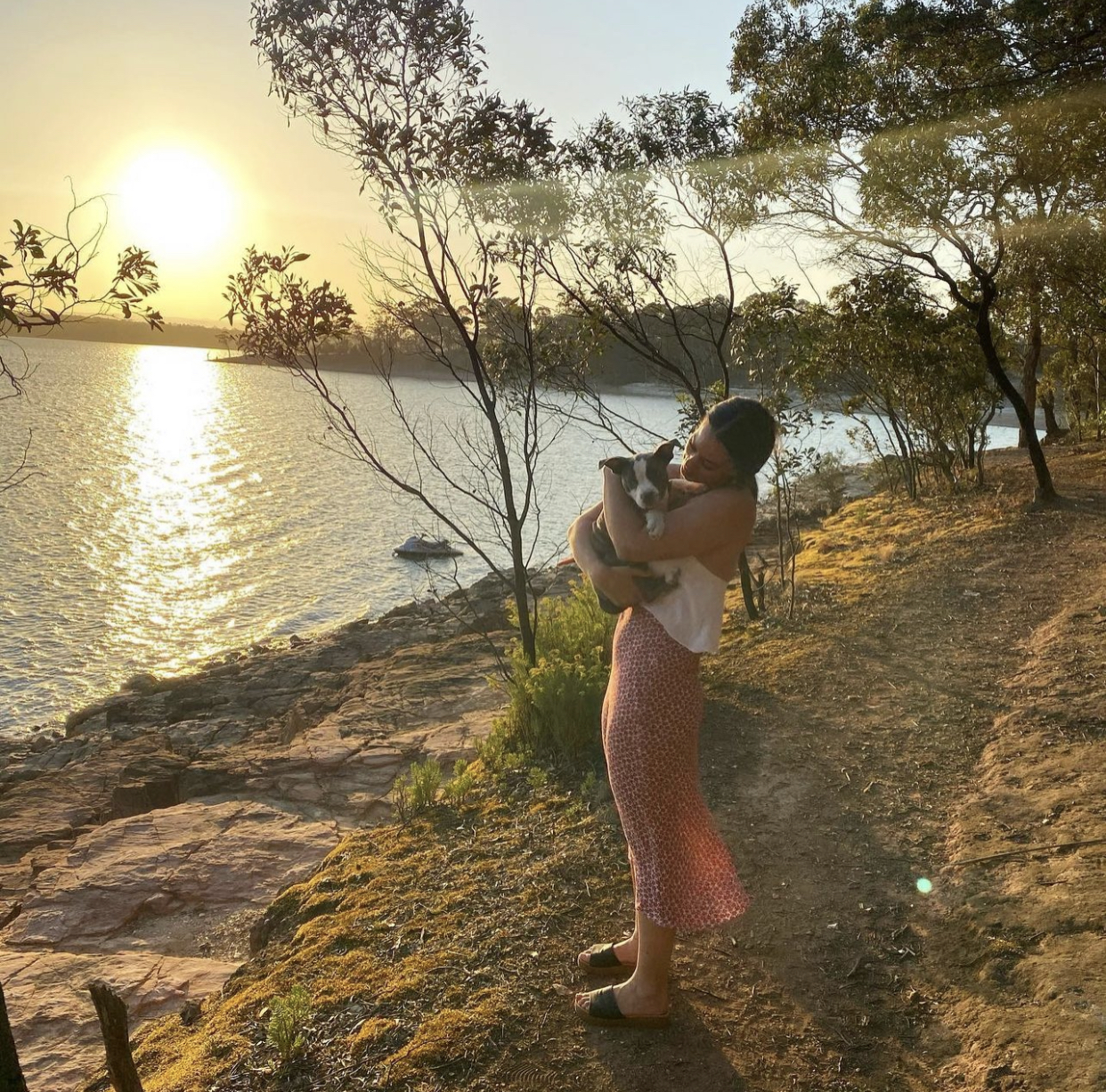
We love to take you behind the scenes to get to know our team. Brie Antonopoulos is a proud Taungurung woman who has worked with the Taungurung Land and Waters Council for three years and provides both on-ground support and marketing for wawa biik. With Taungurung heritage from her Mum’s side and Greek heritage from her Dad’s side she believes she has the best of both worlds. Brie affectionately describes growing up with three annoying brothers in Hampton on Bunurung Country. At one stage her and her brothers all worked together for TLAWC which was a proud moment. She admits that it has only been in the last four years that she has deeply connected to her Taungurung culture, thanks to her work. We had a yarn to learn more of her story.

A yarn with Elder and artist – Aunty Jo

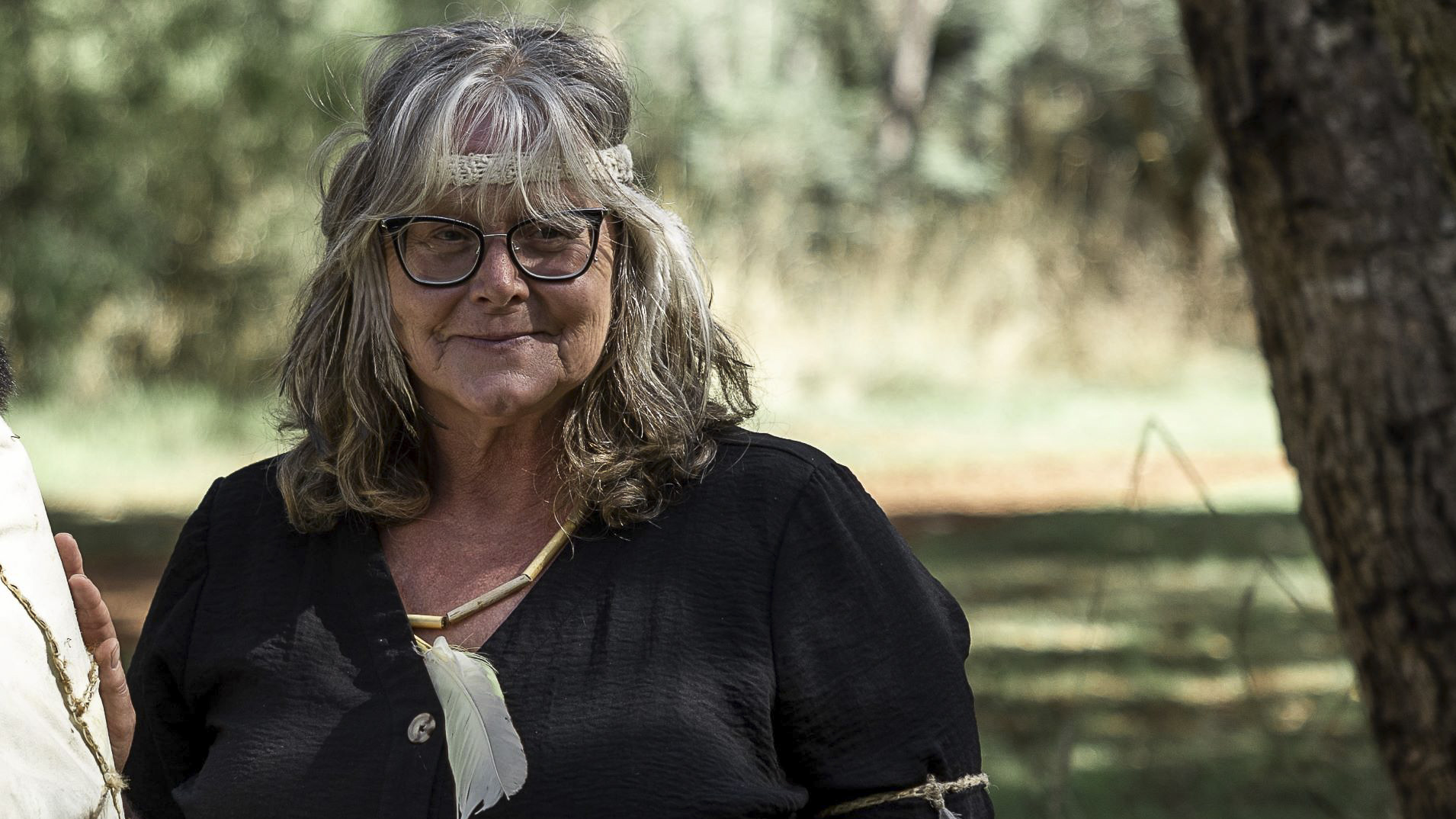
Aunty Joanne Honeysett is a proud Taungurung Elder, wawa biik Cultural Tour Guide, mother, recent grandmother and is also an accomplished artist. Having worked in challenging community roles in the past, her love of painting provided a therapeutic outlet. With an urge to share her Taungurung identity and story, her paintings have become an important part of of her cultural expression. Her work has been commissioned for public murals and sold internationally but she also keeps a tightly-held private collection that is sacred to her and her kids. We yarn about her personal art journey, her art style and future aspirations for the Taungurung artist community.

The back story of ”We Scar Many Trees” with the artist, Uncle Mick Harding

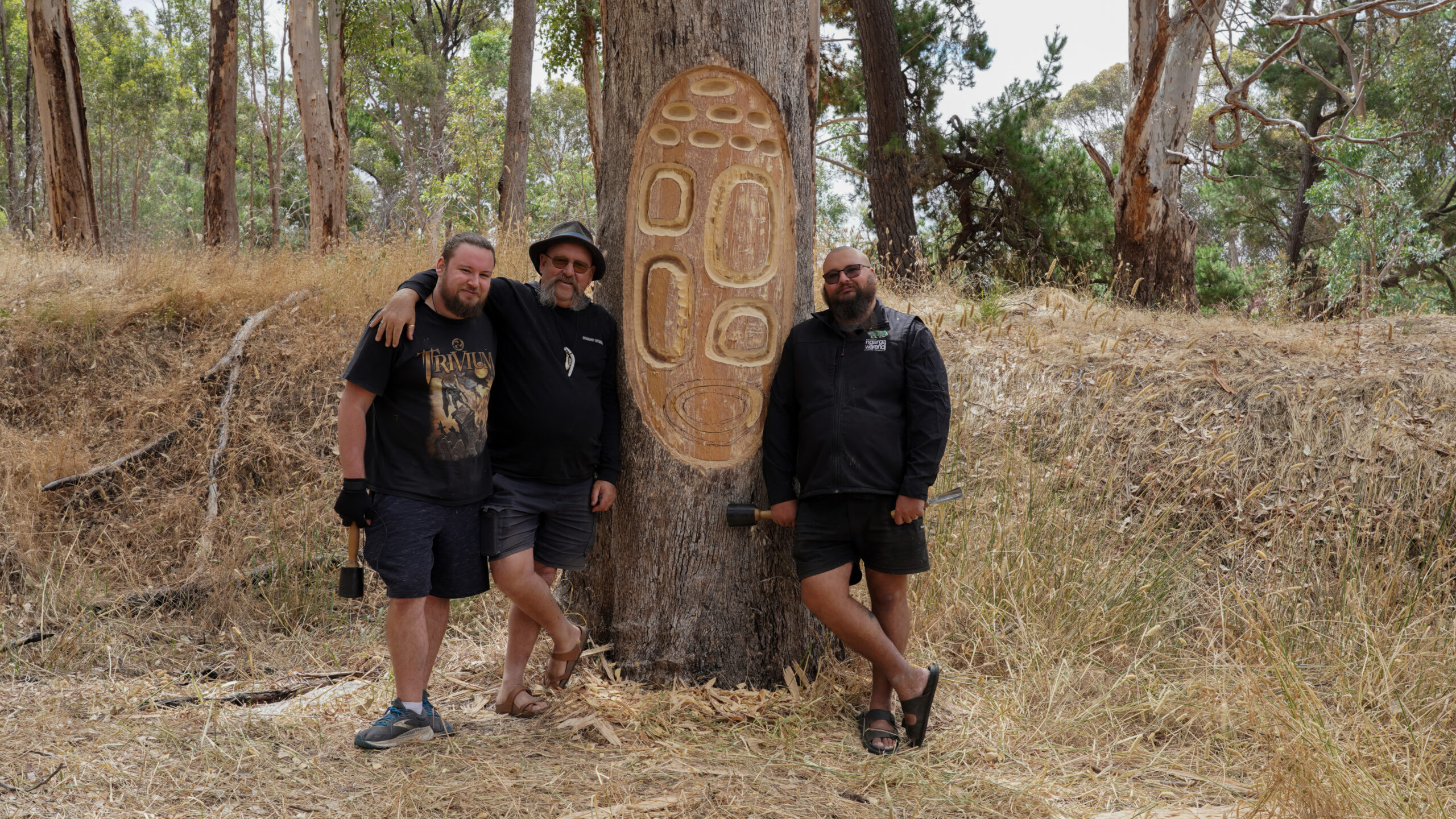
Uncle Mick is a proud Taungurung Elder of the Yowong-Illam-Baluk and Nattarak Baluk clans of the Taungurung Nation and takes pride in sharing cultural narratives through his work. He describes art as a ‘rainbow of many things’, which is fitting for someone that specialises in many different mediums including wood working, sculpture, and printmaking.  He has his own family art business called Ngarga Warendj (Dancing Wombat) producing beautiful hand-made cultural items and gifts.

He likes to push the boundaries with his art practice. His most recent project called ‘We Scar Many Trees’ took an innovative approach by taking an age-old cultural practice of scarring trees and presenting it as a contemporary art form. Working alongside his sons Mitchil and Corey they expressed cultural stories within the scarred trees across the entire length of the Great Victorian Rail Trail. Uncle Mick cites this project as one of his most proud because of the opportunity to pass on cultural knowledge to his sons as part of the process.

We yarn with Uncle Mick to delve into his unique art story and find out more about his works on the recently launched Art on the Great Victorian Rail Trail.

A closer look at the Yea Wetlands Discovery Centre

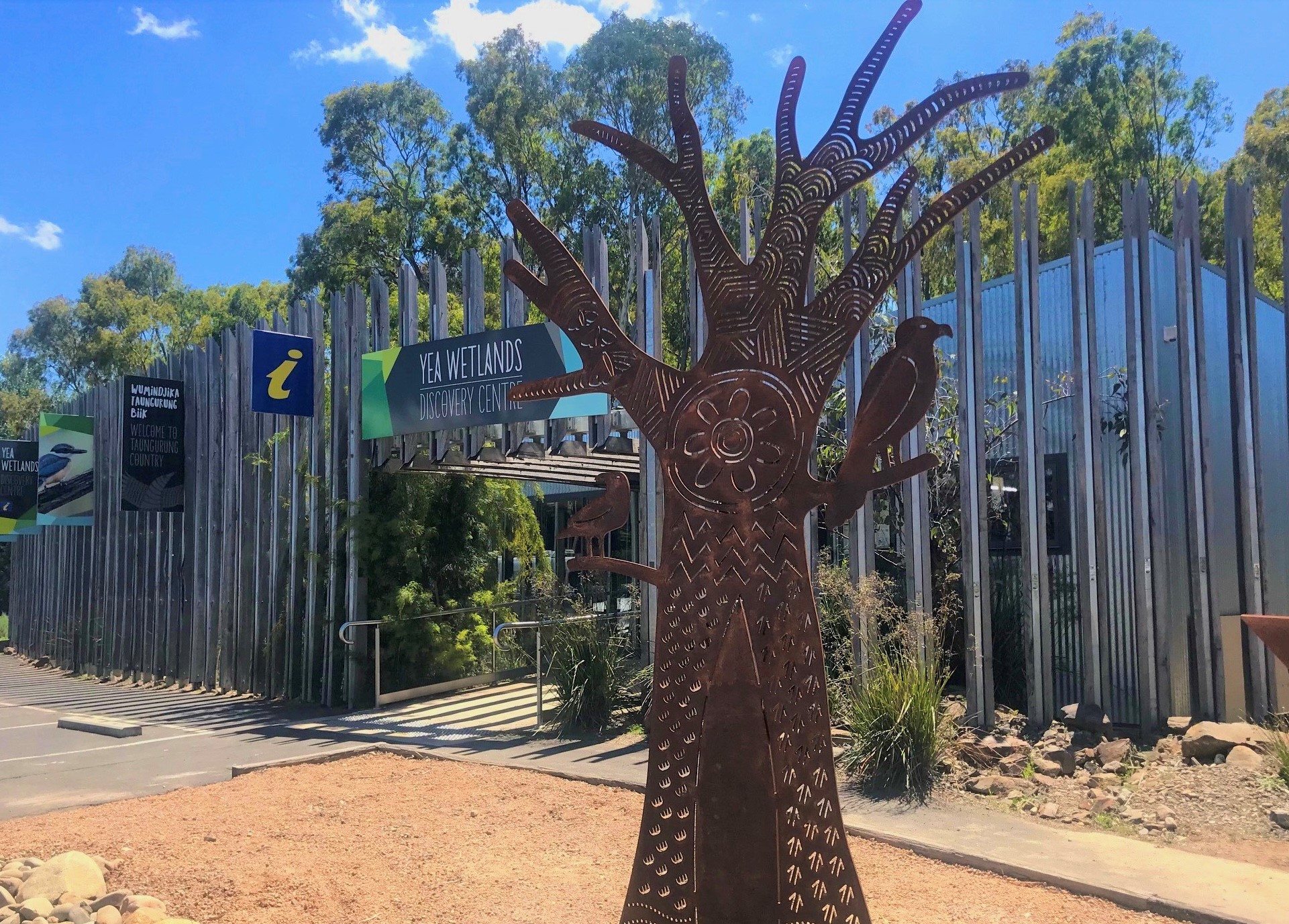
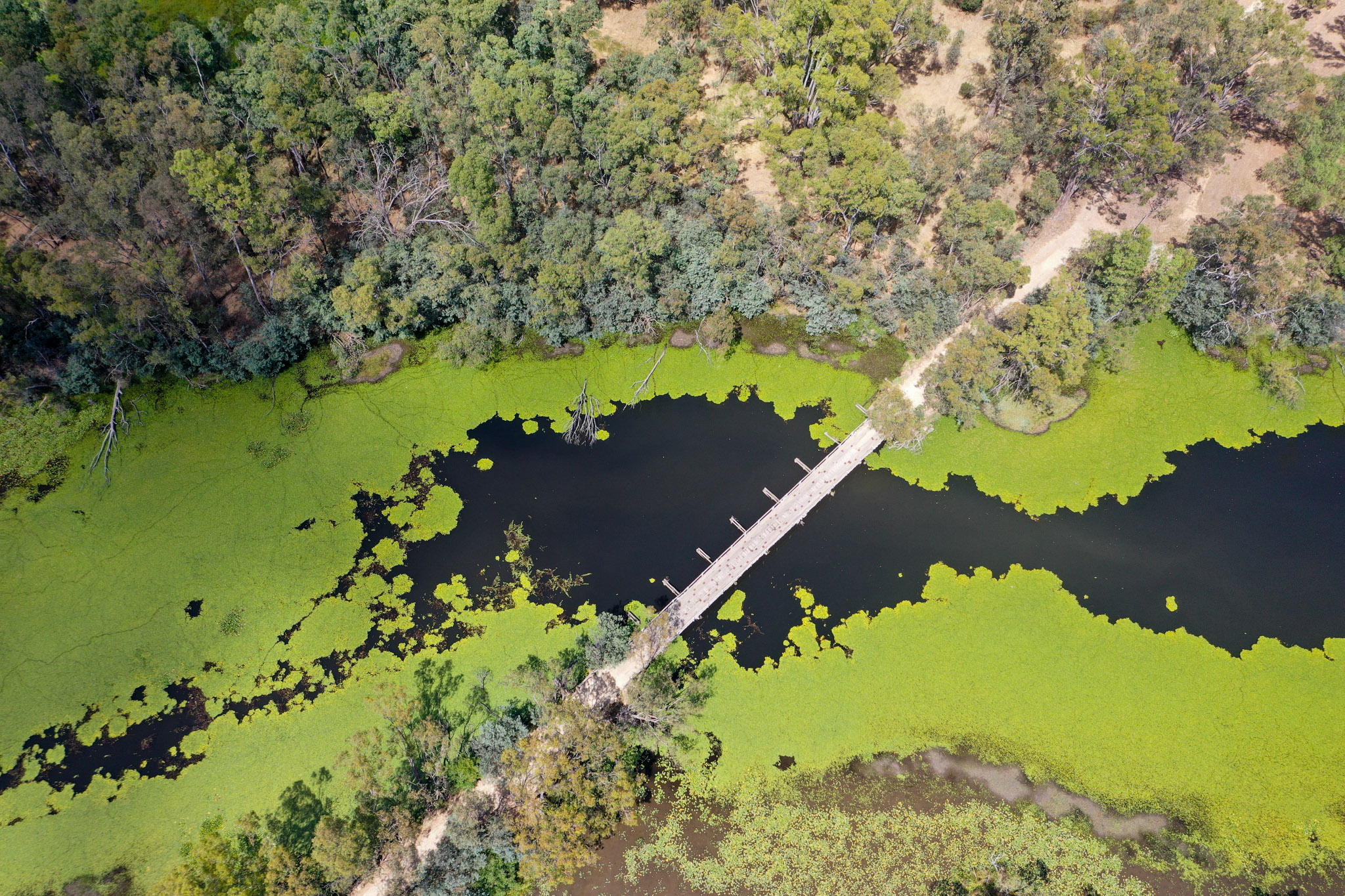
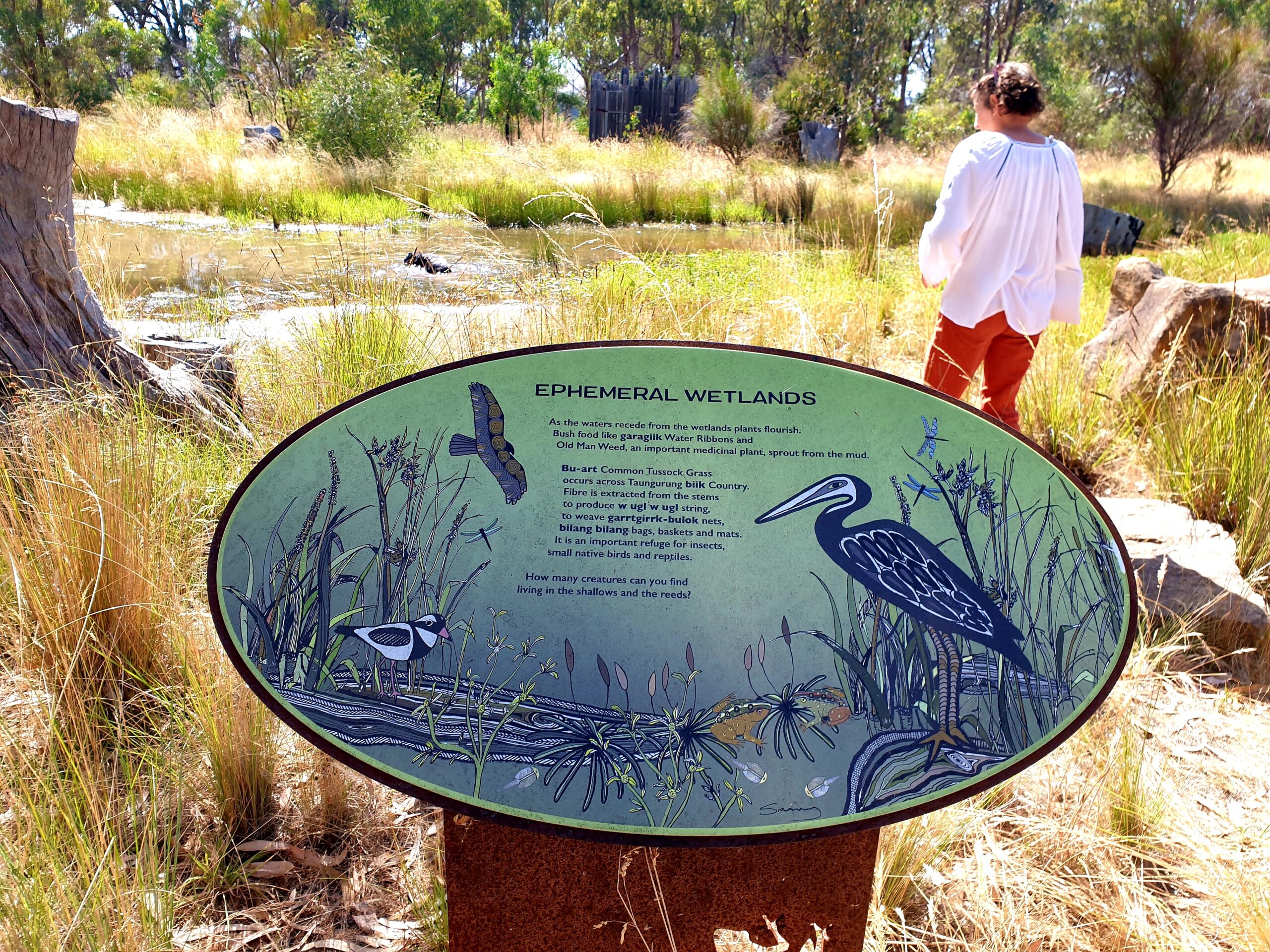
The Yea Wetlands Discovery Centre, in the heart of Taungurung Country is not only an accredited Visitor Information Centre but is also a multi-faceted learning experience on the importance of water resources and wetland ecology. It features interpretive displays, a gift shop, room hire and local information inside but the main drawcard is what is to be found outside. They have 32 hectares of wetlands and walking trails on their back doorstep offering recreational and educational opportunities in this unique habitat.

With strong family ties to the Yea area, Aunty Angela ten Buuren (Franklin), along with her family members have been heavily involved in the wetlands committee over many years. They are passionate about sharing the Taungurung story of this place and embedding Taungurung perspectives and culture into both the visitor experience and management of this important ecosystem on Country.

We yarn with Aunty Angela about the Taungurung aspects that visitors can engage with at the Yea Wetlands Discovery Centre precinct, including the Franklin Trail, Taungurung art, Indigenous Garden, and new Taungurung art on display.

wawa biik Newsletters

Please click here to read the latest edition

Just like the pride and purpose our Elders feel when wrapped in their possum skin cloak, we want wawa biik to be a warm and inspiring space that brings people together to celebrate and learn about our traditional and contemporary aspects of Culture.

wawa biik means ‘hello Country’ which proudly acknowledges our continuous connections, relationships, and responsibilities we have and will always have to Taungurung Country as the First People and Custodians of this land. But you too have a responsibility to biik and can do your bit to strengthen culture – and it all starts with saying wawa to Country, with us.

Our newsletters will give you a sense of our purpose, introduce you to our Country, our inspiring People and our Partners, and invite you to take further steps to deepen your relationship with Country and Culture.

These are exciting times. Ngun godjin (thank you) for coming on this journey with us!

Newsletters:

Current: NAIDOC Special

Nurturing the next generation of Taungurung leaders

A big focus for wawa biik is creating space for our Taungurung Elders to spend time with the younger generation on Country to provide them with cultural knowledge, leadership opportunities and confidence in asserting their cultural identity.

Bobbie Pepper, a Wotjobaluk, Gunaikurnai Woman with ties to Taungurung, has a background in creating and delivering Koori Leadership programs and is proud to head up the Taungurung Youth Group called Wayilak Bayubarring (meaning youth round circle). We yarn with Bobbie about the importance of creating this fun and safe space for Taungurung youth to lead their own vision, have a voice, and stay connected with each other and their culture to drive the future that they want to see.  

A yarn with Taungurung Elder Uncle Shane

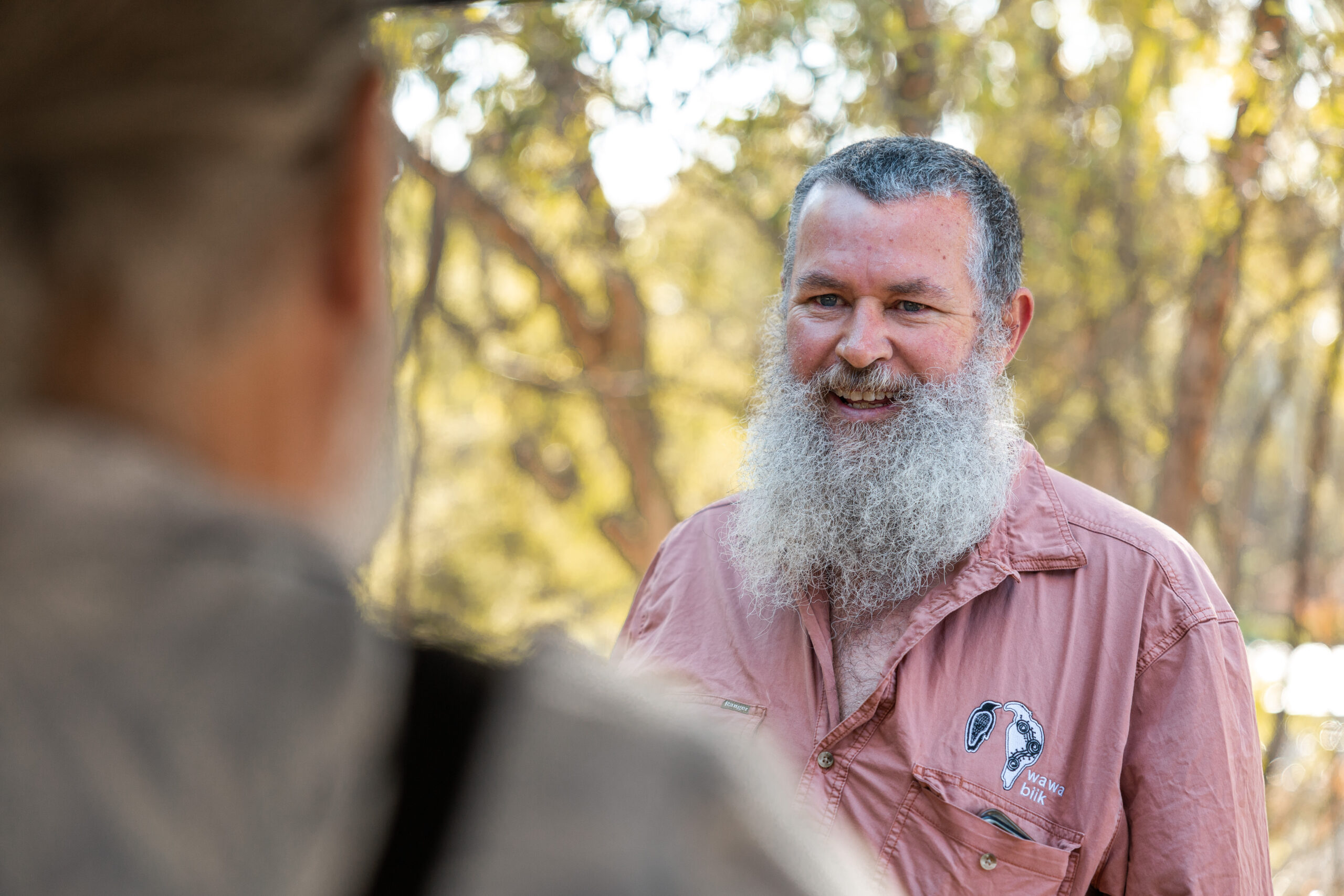
Uncle Shane is a Taungurung Elder who is today continuing the good work of his Mum – the late Aunty Judy Monk – working hard to protect and celebrate Taungurung Culture for future generations. He’s the bearded, larger than life bloke that is always up for a laugh. You’ll find him doing cultural surveys, behind the wheel of the wawa biik bus or having a natter with the young ones. He is the all-rounder that can do anything and will do anything for his mob. Uncle Shane has worked for the Taungurung Land and Waters Council for 8 years and is now the backbone of wawa biik. He leads all the wawa biik experiences, passionately sharing his Culture and giving visitors a stronger connection to both Culture and Country. Uncle Shane loves what he does. We yarn with him to learn more about his story.  

This special place on Taungurung Country is where the White Bellied Sea Eagle calls home

Tahbilk Winery Estate is well known for its wine but this place encompasses so much more. Few would know that the Estate boasts 1,214 hectares of river flats and a biodiverse wetland habitat that is a haven for wildlife. With the land and waring (Goulburn River) at the heart of all they do, Tahbilk is serious about protecting and regenerating the land. They are proud to have been certified Net Carbon Zero by Toitu Envirocare, are Certified by Sustainable Winegrowing Australia and have revegetated 180 hectares of land using native plants. Of course the story of tabilk-tabilk (place of many waterholes in Taungurung language) connects deeply to the Taungurung story and we are proud to partner with Tahbilk to share this story through the self-guided Indigenous Flora Trail and our wawa biik guided experiences. Lachie Thomas is Tahbilk’s Environmental and Vineyard Research Analyst who has the enviable job of working amongst this beautiful ecosystem on a daily basis and is behind many of these sustainability initiatives. We yarn with Lachie about all things work, wetlands and wildlife.

A yarn with Cath Olive about ‘The Arb’

It is a warm January morning and the cicadas are making a racket. Cath’s dog ‘Indi’ takes off into the wetlands, making a splash as dragonflies circle above.  A grasshopper takes perch on Cath’s arm as we amble along the daanak trail yarning about all things plants, partnerships and her favourite patch.

10 Taungurung words to learn before visiting Country

Australia is home to approximately 700 First Nations languages, most of which have been displaced since colonisation. Language is a key part of cultural identity and the Taungurung community is today proudly reviving their Taungurung language. Aunty Loraine Padgham – Taungurung Elder and Chair of the Taungurung Language Group, explains more about the revitalisation of the Taungurung language and provides us with 10 key words you too can learn and speak when on Taungurung Country:

Why is it important to heal the Taungurung language?

Our language is inextricably connected to our culture, our understanding of place and time.  Embedded in our language is a story that is incomplete and needs to be reclaimed to be able to understand our ancestors, their way of life, the time in which they lived and their way of thinking.

What is the process for healing language?

Language revival of an oral language, that has not been spoken for many generations, has been a long and arduous task.  From a collection of words and phrases recorded by early colonists, clergy, government officials and others, an analysis was undertaken to ascertain the sounds and pronunciation.  These sounds were then represented by agreed community spelling principles.  With the aid of linguistic techniques, an analysis of recorded phrases was undertaken to determine the underlying grammar of forming sentences.  Many Taungurung Elders have contributed to our language reclamation to enable us to reach the point of being able to develop materials for future generations.

As a Taungurung Elder, how does it feel to speak revived Taungurung language on Country? 

Developing a rudimentary skill of speaking basic Taungurung has been challenging and at the same rewarding.  To be able to speak simple sentences and use words that have not been heard for many generations acknowledges those who came before us.  It enables us to relate more closely with our ancestors by gaining an understanding of a thinking process that is quite different to English.  It directly connects us with our country and history.

What is your hope for future of Taungurung language?

The hope is for members of community to have some understanding of the language.  To be able to use simple greeting words, know the names of some plants and animals and have a knowledge of the meanings behind placenames.  Each small step helps the community gain a greater understanding of our language.